高空滤食
High Altitude Feeding
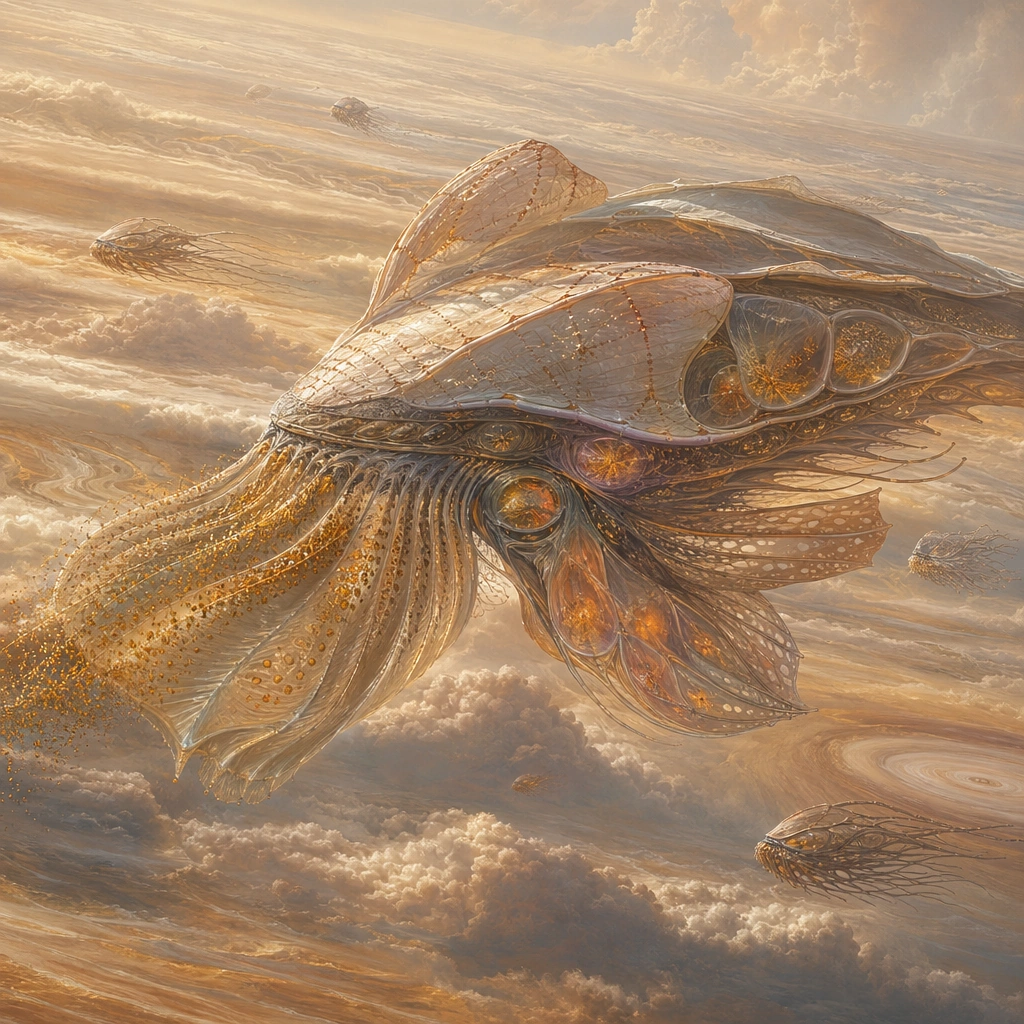
在富化学组分的薄云带中展开滤食结构的个体。
作品信息
风格标签
提示词原文英文,可直接复制使用
Scene:
Show a bright upper-band feeding zone where sunlight diffuses through thin aerosols and paints the clouds in pale gold and cream. The square frame should feel cleaner and calmer than the storm images, with subtle ribboning that indicates nutrient-rich flow. Build the frame as a square natural history study with disciplined composition, believable lighting, and enough environmental evidence to explain how this organism or system functions without any caption. Keep the image polished, observational, and suitable for a research gallery rather than pulp fantasy spectacle.

Subject:
Focus on one individual opening broad filter membranes and channeling aerosol-rich gas through internal processing chambers. Small attendant organisms and particulate streaks can help explain flow direction and feeding efficiency. Show the anatomy, habitat interaction, and scale cues clearly so the viewer can infer locomotion, feeding, reproduction, or ecological role from the visual alone. Every visible structure should feel evolved for a purpose, with layered foreground, midground, and background information that rewards close inspection.

Important details:
Assume these giants maintain buoyancy with gas-filled tissues, membrane sails, and chemistry-driven metabolism in a dense upper atmosphere. Their behavior should respond to pressure bands, storm fronts, nutrient aerosols, and electrical weather rather than ocean analogies pasted into the sky. Make the feeding method visually understandable through body mechanics, membrane shape, and cloud chemistry cues. This is atmospheric grazing, not predatory action, so keep the mood patient and ecological. Favor coherent biology over decorative excess: tissues, shells, membranes, spores, tendrils, fins, silica lattices, or atmospheric sacs should all follow one material logic. Preserve a convincing relationship between the environment and the body plan, use restrained color hierarchy, and make the image feel like a serious speculative field record rather than a random monster concept.

Use case:
Jovian Cloud Whale Migration single study 8/9.

Constraints:
No readable text, no watermark, no logos, preserve exact 1:1 aspect ratio, no baleen whale copy, no vacuum-machine look, no Earth sky blue, no mechanical intake vents, no accidental brand resemblance, no direct copy of known terrestrial species, no cartoon simplification.